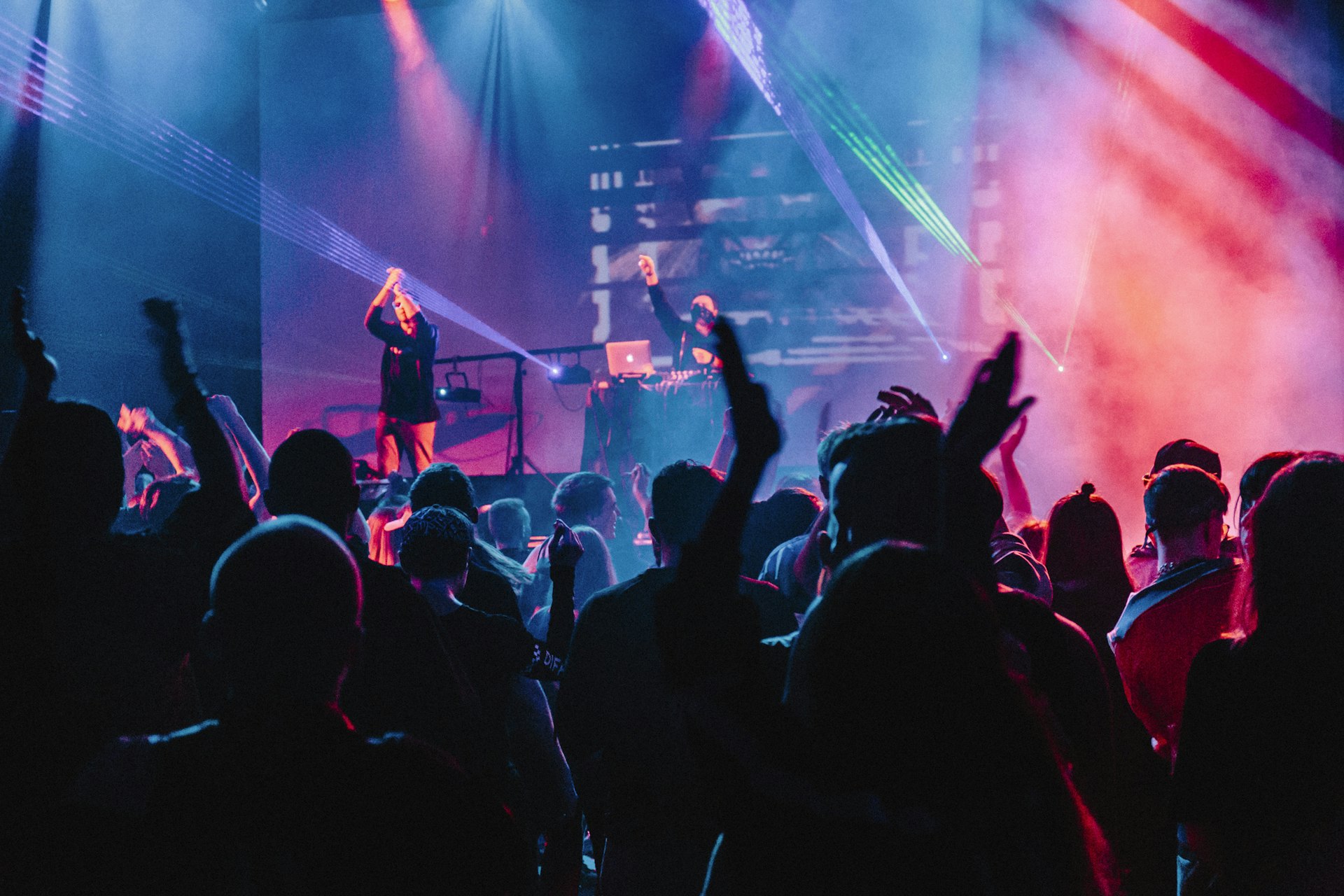
The Warehouse Project was born in 2006, the brainchild of Sacha Lord and Sam Kandel, two Manchester promoters who recognised that the city needed a world-class indoor electronic music event to fill the gap left by the closure of legendary clubs like The Hacienda and Sankeys. Their vision was not to open a traditional nightclub that operated year-round, but to create a seasonal event series — a concentrated burst of the finest electronic music programming in the world, compressed into the autumn and winter months when Manchester's music-obsessed population craved somewhere extraordinary to dance.
The first Warehouse Project season took place in the tunnels beneath Store Street, adjacent to Manchester Piccadilly station. The venue was a network of Victorian-era railway arches — low-ceilinged, brick-walled, dripping with atmosphere. The conditions were raw: condensation ran down the walls, the bass reverberated through the tunnels in ways that no purpose-built venue could replicate, and the crowd was pressed together in a space that felt genuinely underground in every sense. Store Street became the spiritual home of WHP, and for many, it remains the definitive Warehouse Project experience. The tunnels gave the event its identity: industrial, intense, unapologetically Mancunian.
Over the following years, WHP grew rapidly. The quality of the lineups escalated season after season, and the event developed a reputation as the place where the biggest names in electronic music wanted to play. The Store Street era established WHP's core programming philosophy: eclectic bookings that ranged from underground techno and house through to bass music, electronica, and live electronic acts, presented in an environment that prioritised the music and the dancefloor above all else. By the early 2010s, The Warehouse Project was widely recognised as the most important club event series in the UK outside of London.
The event briefly moved to other venues over the years, including a spell at Victoria Warehouse in Trafford and events at the Piccadilly Train Station car park, but it always returned to Store Street. In 2019, however, WHP made the biggest move in its history, relocating to Depot Mayfield — a massive former Royal Mail sorting office directly behind Piccadilly station. The move to Depot Mayfield was transformative: the new venue offered vastly more space, multiple rooms, improved facilities, and a capacity of approximately 10,000. It allowed WHP to scale its ambitions without compromising the raw energy that had defined it from the beginning.