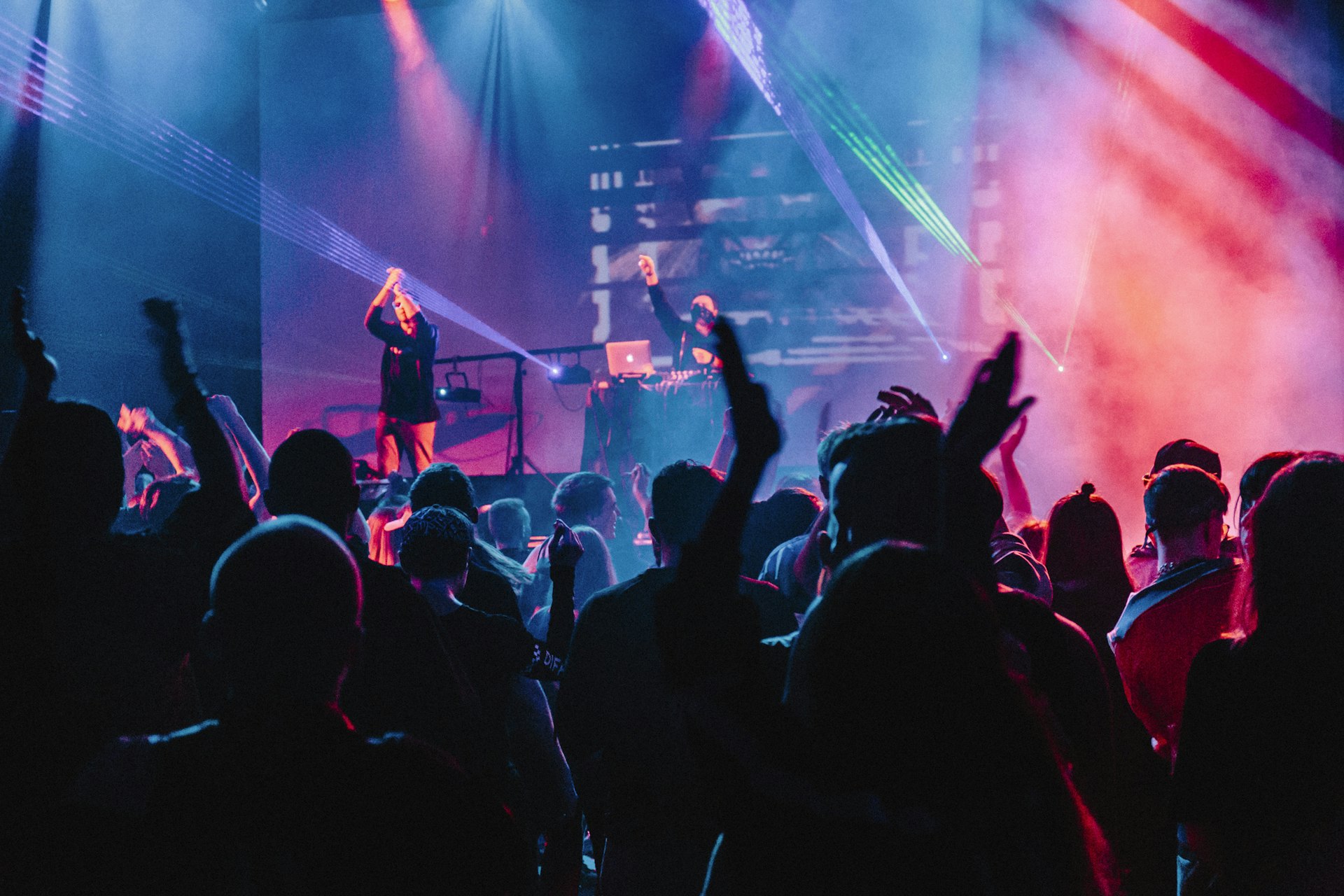
Dark atmospheric warehouse rave space with dramatic laser lighting and crowd, representing The Warehouse Project Manchester

The Warehouse Project

📍 Depot Mayfield, Manchester · Since 2006

Techno House Electronica Bass Seasonal
2006
Founded
~10k
Capacity
Sep–Jan
Season
Multi
Rooms

📖 History

From the Store Street tunnels to Depot Mayfield — the evolution of the UK's most important club event

The Warehouse Project was born in 2006, the brainchild of Sacha Lord and Sam Kandel, two Manchester promoters who recognised that the city needed a world-class indoor electronic music event to fill the gap left by the closure of legendary clubs like The Hacienda and Sankeys. Their vision was not to open a traditional nightclub that operated year-round, but to create a seasonal event series — a concentrated burst of the finest electronic music programming in the world, compressed into the autumn and winter months when Manchester's music-obsessed population craved somewhere extraordinary to dance.

The first Warehouse Project season took place in the tunnels beneath Store Street, adjacent to Manchester Piccadilly station. The venue was a network of Victorian-era railway arches — low-ceilinged, brick-walled, dripping with atmosphere. The conditions were raw: condensation ran down the walls, the bass reverberated through the tunnels in ways that no purpose-built venue could replicate, and the crowd was pressed together in a space that felt genuinely underground in every sense. Store Street became the spiritual home of WHP, and for many, it remains the definitive Warehouse Project experience. The tunnels gave the event its identity: industrial, intense, unapologetically Mancunian.

Over the following years, WHP grew rapidly. The quality of the lineups escalated season after season, and the event developed a reputation as the place where the biggest names in electronic music wanted to play. The Store Street era established WHP's core programming philosophy: eclectic bookings that ranged from underground techno and house through to bass music, electronica, and live electronic acts, presented in an environment that prioritised the music and the dancefloor above all else. By the early 2010s, The Warehouse Project was widely recognised as the most important club event series in the UK outside of London.

The event briefly moved to other venues over the years, including a spell at Victoria Warehouse in Trafford and events at the Piccadilly Train Station car park, but it always returned to Store Street. In 2019, however, WHP made the biggest move in its history, relocating to Depot Mayfield — a massive former Royal Mail sorting office directly behind Piccadilly station. The move to Depot Mayfield was transformative: the new venue offered vastly more space, multiple rooms, improved facilities, and a capacity of approximately 10,000. It allowed WHP to scale its ambitions without compromising the raw energy that had defined it from the beginning.
2006

The Warehouse Project Launches at Store Street

Sacha Lord and Sam Kandel launch The Warehouse Project in the tunnels beneath Store Street, near Manchester Piccadilly station. The Victorian railway arches provide a raw, atmospheric setting that immediately captures the imagination of Manchester's clubbing community. The first season establishes WHP as something genuinely special — a concentrated programme of world-class electronic music in a space that feels authentically underground.

2007–2010

Rapid Growth & National Recognition

WHP quickly outgrows its initial status as a local Manchester event. Word spreads nationally and internationally about the quality of the lineups and the intensity of the Store Street experience. The event begins attracting headline bookings from the world's biggest DJs and live electronic acts. The iconic imagery of the sweating, heaving Store Street tunnels becomes synonymous with WHP's identity. Bugged Out and other promoter collaborations bring diverse programming.

2010–2012

Parklife Connection & Festival Synergy

Sacha Lord co-founds Parklife Festival, Manchester's premier outdoor electronic music festival held in Heaton Park. Parklife and WHP become the twin pillars of Manchester's dance music scene — Parklife for the summer, WHP for the winter. The events share booking philosophies and cross-promote, with Parklife afterparties becoming regular fixtures of the WHP calendar. Together, they ensure Manchester has world-class electronic music programming twelve months a year.

2013–2018

The Peak Store Street Years

WHP reaches its zenith at Store Street. Lineups become increasingly ambitious, featuring the likes of Four Tet, Jamie XX, The Chemical Brothers, Dixon, Ben UFO, Seth Troxler, Jon Hopkins, and many more. The closing parties and New Year's Eve events achieve legendary status. WHP is now unquestionably the UK's most important club event series outside London. The Store Street tunnels become one of the most iconic venues in British clubbing history.

2019

The Move to Depot Mayfield

WHP makes the landmark decision to relocate to Depot Mayfield, a vast former Royal Mail sorting office behind Piccadilly station. The new venue is a dramatic upgrade: approximately 10,000 capacity across multiple rooms and spaces, improved facilities, and the scale to host truly ambitious production. The inaugural Depot Mayfield season includes a historic Aphex Twin show that sells out in minutes and is widely regarded as one of the greatest electronic music events ever staged in Manchester.

2020–Present

Depot Mayfield Era & Continued Dominance

After navigating the pandemic-enforced break, WHP returns stronger than ever at Depot Mayfield. The venue allows for increasingly spectacular production and multi-room programming. Sacha Lord's appointment as Greater Manchester's Night Time Economy Adviser further cements WHP's role at the heart of Manchester's cultural identity. Each season continues to sell out, with WHP attracting audiences from across the UK and Europe. The event remains the gold standard for seasonal club programming.


🏙 The Venue

From Victorian railway arches to a vast Royal Mail sorting office

🏗

Depot Mayfield (2019–Present)

Depot Mayfield is WHP's current home — a colossal former Royal Mail sorting office located directly behind Manchester Piccadilly station. The building dates from the early 20th century and was part of the Mayfield railway station complex, which fell out of use in the 1980s. The cavernous interior has been repurposed as a multi-room event space with a total capacity of approximately 10,000. Its industrial architecture — exposed steel columns, soaring ceilings, raw concrete — provides a dramatic backdrop that honours WHP's warehouse origins while offering vastly improved infrastructure for sound, lighting, and crowd management.

🛤

Store Street (2006–2018)

The original and most emotionally resonant WHP venue. The Store Street tunnels were a network of Victorian brick railway arches beneath Manchester Piccadilly station, near the old Boddingtons Brewery site. Low ceilings amplified the bass, condensation dripped from the brickwork, and the crowd was compressed into a space that felt genuinely subterranean. For many loyal WHP attendees, Store Street remains the truest expression of what The Warehouse Project is about: raw, intense, and unmistakably Manchester. The venue's limitations — its cramped spaces, its heat, its rough edges — were also its greatest strengths.

📌

Other Historical Venues

Over its history, WHP has also hosted events at several other Manchester locations. Victoria Warehouse in Trafford served as a temporary home during transitional periods, offering a large open-plan industrial space. The Piccadilly Train Station car park was used for a memorable early season, its brutalist concrete setting adding to WHP's industrial character. Each venue contributed to the event's evolving identity, but it was always the Store Street tunnels and now Depot Mayfield that defined WHP's physical and spiritual character.


🌟 Notable Events

Landmark nights that defined The Warehouse Project and Manchester's dancefloor history

🔴

Aphex Twin — Depot Mayfield, 2019

The first season at Depot Mayfield was headlined by a once-in-a-generation event: Aphex Twin, the enigmatic electronic genius Richard D. James, performing a full audiovisual show in the cavernous former sorting office. Tickets sold out in minutes. The performance featured Aphex Twin's signature warped visuals, overwhelming bass, and a setlist that ranged from abrasive acid techno to ethereal ambient. It was widely hailed as one of the greatest electronic music events ever staged in Manchester and immediately legitimised Depot Mayfield as a world-class venue.

🔴

Four Tet x Floating Points x Caribou

One of the most celebrated bookings in WHP history. The triple bill of Four Tet, Floating Points, and Caribou brought together three of the most innovative minds in contemporary electronic music for a night that transcended typical DJ event programming. Each artist delivered a set that showcased their unique approach to electronic music — Four Tet's euphoric, textural house, Floating Points' jazz-inflected electronica, and Caribou's psychedelic dance music — creating a night that was as intellectually stimulating as it was physically ecstatic.

🔴

The Chemical Brothers Live

The Chemical Brothers have a deep connection to Manchester, and their live shows at WHP have been among the event's most spectacular productions. Combining their thunderous big-beat and acid-house productions with elaborate visual projections and lighting rigs, a Chemical Brothers show at The Warehouse Project represents the collision of Manchester's musical heritage with cutting-edge audiovisual technology. Their WHP appearances have consistently been among the fastest-selling events of each season.

🔴

NYE & NYD Closing Parties

The Warehouse Project's closing parties — typically held across New Year's Eve and New Year's Day — have achieved legendary status in British clubbing culture. These marathon events draw the biggest lineups of the season and attract clubbers from across the UK and beyond. The atmosphere is electric: the knowledge that this is the final night of the WHP season gives the closing parties an emotional intensity that few other events can match. They are widely regarded as the best New Year's Eve events in the UK outside of London.

🔴

Jon Hopkins Live

Jon Hopkins' live performances at WHP have been among the most transcendent experiences the event has offered. His album Singularity tour in particular translated extraordinary well to the warehouse setting, with the combination of pummelling techno crescendos and delicate ambient passages creating a dynamic range that the venue's acoustics and sound system amplified to devastating effect. Hopkins' WHP shows demonstrated that the event could programme deeply artistic electronic music without sacrificing dancefloor intensity.

🔴

Bicep Live

Belfast duo Bicep have become one of WHP's most iconic bookings. Their live show — featuring their euphoric brand of rave-influenced house and breakbeat alongside stunning visual production — is perfectly suited to the Depot Mayfield setting. Tracks like "Glue" and "Atlas" have become WHP anthems, and the crowd response to their performances has been among the most intense the event has witnessed. Bicep at WHP represents the event at its most communal and euphoric.


🎤 Sound & Production

World-class audio engineering and production design in a vast industrial space

The Warehouse Project has always placed enormous emphasis on sound quality. From the very first season in the Store Street tunnels, WHP invested in serious sound infrastructure that set it apart from typical promotional events. The confined spaces of Store Street presented unique acoustic challenges — low ceilings and brick walls created powerful natural reverberations — and WHP's sound engineers learned to work with these characteristics rather than against them, producing a bass-heavy, immersive sound that became part of the venue's identity.

The move to Depot Mayfield in 2019 allowed WHP to significantly upgrade its sound and production capabilities. The main warehouse space at Depot Mayfield features a bespoke sound system designed to fill the cavernous room with crisp, detailed audio at extreme volumes while maintaining clarity across the frequency spectrum. Multiple rooms are equipped with their own dedicated systems, each tuned to the specific acoustic properties of the space. The result is that whether you are in the main room experiencing a headline techno set or in a smaller side room for a more intimate DJ performance, the sound quality is consistently exceptional.

Production design at WHP has become increasingly ambitious with each season. The Depot Mayfield venue allows for large-scale lighting rigs, laser installations, LED walls, projection mapping, CO2 cannons, and pyrotechnics on a scale that rivals major festival main stages. For special events — such as Aphex Twin, The Chemical Brothers, or Bicep — bespoke production designs are created that transform the industrial space into immersive audiovisual environments. WHP's production team works closely with artists and their creative directors to ensure that every show delivers visual impact to match the musical programming.

The multi-room configuration at Depot Mayfield also allows WHP to programme contrasting sonic environments across a single night. The main room might feature high-energy techno with full production, while an adjacent space offers deeper house music in a more stripped-back setting, and a third area might host experimental electronica or bass music. This diversity is central to WHP's appeal and reflects the broad musical tastes of its audience.


🏛 Manchester Legacy

From The Haciënda to The Warehouse Project — carrying the torch of Manchester's dancefloor culture

Manchester's relationship with electronic music and club culture runs deeper than almost any other city in the world. The story begins with The Haciënda, the legendary nightclub opened by Factory Records and New Order in 1982 on Whitworth Street West. The Haciënda became the crucible of the acid house revolution in the late 1980s, with DJ Mike Pickering's Nude night and Graeme Park's sets introducing ecstasy culture and Chicago house to a generation of young Mancunians. The club's influence was seismic — it helped birth the Madchester movement, shaped the sound of the early 1990s, and turned Manchester into the centre of British youth culture.

When The Haciënda closed in 1997, the baton passed to a new generation of venues. Sankeys, originally known as Sankeys Soap, opened in 1994 in Ancoats and became Manchester's premier underground club through the late 1990s and 2000s. With its raw, stripped-back aesthetic and commitment to quality techno and house programming, Sankeys earned a reputation as one of the UK's finest small clubs and a DJ Mag Top 100 regular. But Sankeys too eventually closed its doors, leaving a void in Manchester's nightlife landscape.

The Warehouse Project emerged at precisely the right moment to fill that void. When Sacha Lord and Sam Kandel launched WHP in 2006, they were inheriting a city with an almost religious devotion to dancefloor culture — a city that had been shaped by The Haciënda and Sankeys, by Factory Records and Madchester, by a deep understanding that the dancefloor is a place of genuine communion and transformation. WHP took that heritage and channelled it into something new: a seasonal event series that combined Manchester's raw, industrial spirit with world-class programming and production.

Sacha Lord's subsequent appointment as Greater Manchester's Night Time Economy Adviser further cemented the connection between WHP and Manchester's cultural identity. Lord has used the position to advocate for the city's nightlife industry at the highest levels of government, arguing that clubs and live music venues are not nuisances to be regulated out of existence but essential cultural institutions that drive economic growth and community cohesion. It is a philosophy rooted in the lessons of The Haciënda and Sankeys — that when a city loses its dancefloors, it loses something irreplaceable.

Today, The Warehouse Project stands as the direct inheritor of Manchester's club heritage. Just as The Haciënda defined the late 1980s and Sankeys defined the 2000s, WHP defines the current era of Manchester dance culture. The connection is not just spiritual but practical: many of the same DJs who cut their teeth at Sankeys or who worshipped at The Haciënda now headline WHP seasons. Manchester's dancefloor tradition is alive and thriving, and The Warehouse Project is its beating heart.


📍 Visitor Information

Everything you need to know before attending The Warehouse Project

📌

Address & Location

The Warehouse Project takes place at Depot Mayfield, 1 Baring Street, Manchester M1 2PY. The venue is a former Royal Mail sorting office located directly behind Manchester Piccadilly station, in the heart of the city centre. The surrounding area includes hotels, restaurants, and late-night food options, making it an easily accessible destination for visitors travelling from across the UK.

🚇

Getting There

Manchester Piccadilly is the nearest railway station and the city's main rail hub, with direct services from London (2h15m), Birmingham, Leeds, Liverpool, Sheffield, and cities across the UK. Depot Mayfield is approximately a 5-minute walk from the station. Manchester Oxford Road is also within walking distance. The venue is well-served by buses and trams (Manchester Metrolink). WHP strongly encourages the use of public transport. Taxis and ride-sharing apps are readily available in the area.

🕑

Season & Event Times

WHP is a seasonal event series running from September through January each year. It is not a year-round venue. Events typically take place on Friday and Saturday nights, with doors opening around 9:00–10:00 PM and events running until 4:00–5:00 AM, though times vary by event. The Opening Party in September and Closing Party around New Year's are the biggest events of the calendar. Always check the official WHP website for specific dates and times.

🎟

Tickets & Entry

Tickets are sold through the official WHP website (thewarehouseproject.com) and authorised platforms like Skiddle. Most events sell out, so advance purchase is essential. Tickets are released in tiers, with early-bird allocations offering the best prices. WHP is strictly 18+ with no exceptions. You must bring valid photo ID (passport, driving licence, or PASS card). Thorough searches are conducted at entry. WHP operates a zero-tolerance policy on certain items — check the official website for the full entry policy before attending.


❓ Frequently Asked Questions

Everything you need to know about The Warehouse Project Manchester

The Warehouse Project runs as a seasonal event series from September through to January each year. It is not a year-round club or venue. The season typically begins with a high-profile Opening Party in late September and culminates with legendary New Year's Eve and New Year's Day closing parties. Events take place primarily on Fridays and Saturdays, with some additional midweek dates for major bookings. The condensed seasonal format is a core part of WHP's identity — it creates urgency and anticipation that a year-round club cannot match.
Tickets for The Warehouse Project are sold through the official WHP website (thewarehouseproject.com) and authorised ticket platforms such as Skiddle. Most events sell out quickly, particularly headline shows and the Opening and Closing parties. Tickets are typically released in batches or tiers, with early-bird allocations at lower prices. It is strongly recommended to sign up for the WHP mailing list and follow their social media accounts to be notified of on-sale dates. Do not buy tickets from unofficial resale platforms, as WHP operates anti-touting measures and invalid tickets will be refused at the door.
Yes. Since moving to Depot Mayfield in 2019, The Warehouse Project operates across multiple rooms and spaces within the vast former Royal Mail sorting office. The main warehouse space is a cavernous room that holds several thousand people and hosts the headline acts with full production. Additional rooms and areas are configured depending on the specific event, allowing WHP to programme diverse lineups spanning different genres across a single night. This multi-room capability is one of the key advantages of Depot Mayfield over the original Store Street tunnels and allows for a richer, more varied experience.
Depot Mayfield is located at 1 Baring Street, Manchester M1 2PY, approximately a 5-minute walk from Manchester Piccadilly station, the city's main railway hub with direct services from London, Birmingham, Leeds, Liverpool, and cities across the UK. Manchester Oxford Road station is also within walking distance. The Manchester Metrolink tram system and numerous bus routes serve the area. The venue is extremely centrally located and easily accessible on foot from Manchester city centre. WHP strongly encourages the use of public transport. Taxis and ride-sharing services are widely available throughout the night.
The Warehouse Project is strictly 18+ for all events, with no exceptions. You must bring valid photo ID to gain entry. Acceptable forms of identification include a passport, a UK driving licence (full or provisional), or a PASS-accredited proof of age card. ID checks are thorough and carried out on every person entering the venue. You will be refused entry without valid identification, regardless of whether you have purchased a ticket. If you are unsure whether your ID will be accepted, check the official WHP website before attending.
Both The Warehouse Project and Parklife Festival are co-founded and operated by Sacha Lord. Parklife is Manchester's premier outdoor music festival, held annually in June at Heaton Park, and attracts around 80,000 people per day. WHP serves as the indoor, winter-season counterpart to Parklife. The two events share a common ethos and booking philosophy, and Parklife afterparties are regularly hosted as part of the WHP calendar during the season. Together, Parklife and WHP form the backbone of Manchester's contemporary electronic music infrastructure, ensuring the city has world-class dance music events throughout the entire year.