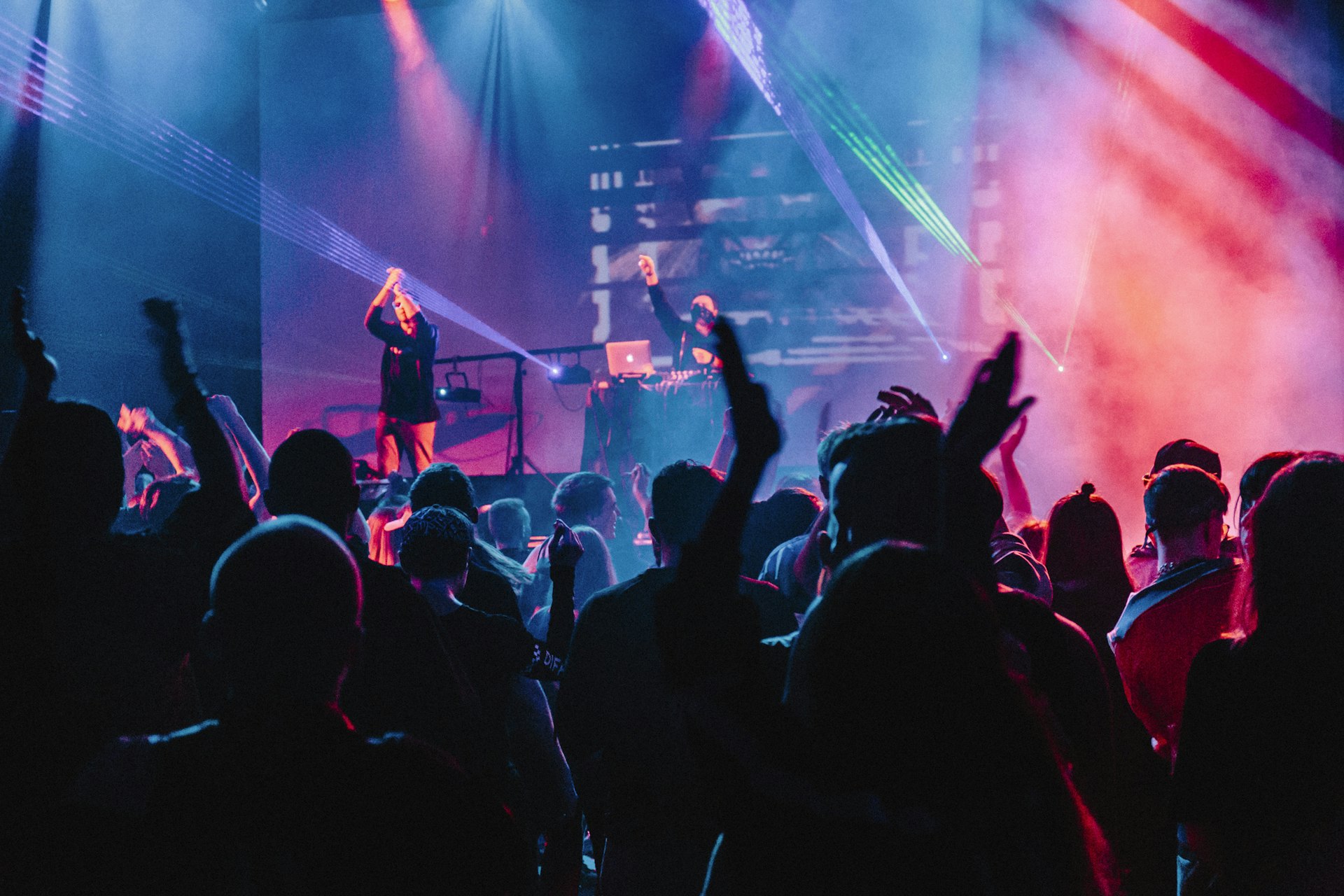
Boiler Room — Johannesburg, South Africa
Black Coffee on home soil. A deeply soulful Afro House set from the Boiler Room in Johannesburg that showcases the warmth, rhythm, and spiritual depth of South African electronic music at its finest.

Nkosinathi Innocent Maphumulo · Born March 11, 1976 · Durban, South Africa
From Durban's townships to a Grammy — the man who brought Africa to the global dancefloor
Nkosinathi Innocent Maphumulo, known to the world as Black Coffee, was born on March 11, 1976, in Durban, KwaZulu-Natal, South Africa. He grew up in Umlazi, one of the largest townships in the country, in a community shaped by the realities of post-apartheid South Africa. From these humble beginnings, Black Coffee would rise to become the most internationally successful African DJ in history, a Grammy Award winner, and the artist most responsible for bringing Afro House to the global stage.
Black Coffee's early life was marked by extraordinary adversity. As a child, he contracted polio, which left his left arm partially paralyzed. This physical challenge could have derailed any aspiration to become a professional DJ, but Black Coffee adapted his technique and never allowed it to become a limitation. He DJs with one fully functional arm — a testament to his extraordinary determination, resilience, and love for music. His disability has become an integral part of his story, and his success despite it has made him an inspirational figure far beyond the music world.
His musical education was transformative. Black Coffee studied music at the Natal Tech (now Durban University of Technology) and received a pivotal scholarship to attend the Red Bull Music Academy in 2003, which exposed him to the wider world of electronic music and connected him with international artists and industry figures. This experience was a turning point, providing him with the knowledge, confidence, and network to take South African house music global.
South Africa has one of the most vibrant house music cultures in the world. Since the 1990s, genres like kwaito, deep house, and Afro House have dominated the country's musical landscape. Black Coffee emerged from this rich ecosystem, absorbing the rhythms, melodies, and spiritual energy of African music and fusing them with the production techniques of global electronic music. His sound — warm, soulful, rhythmically complex, and deeply rooted in African tradition — offered something genuinely new to the international dance music scene.
In 2005, he released his debut album, "Black Coffee", which was a massive success in South Africa and established him as one of the country's biggest DJs. Subsequent albums including "Have Another One" (2007), "Africa Rising" (2012), and "Pieces of Me" (2015) expanded his reach and refined his sound. Key tracks like "Superman," "10 Missed Calls," and "We Dance Again" (featuring Nakhane Toure) became anthems in the South African house scene.
Black Coffee's international breakthrough came when he secured a residency at Hi Ibiza (formerly Space Ibiza), becoming the first African DJ to hold a major Ibiza club residency. This was a landmark achievement that shattered barriers in a scene historically dominated by European and American artists. His Hi Ibiza nights became known for their soulful, Afro House-infused atmosphere, attracting a diverse international crowd and proving that African electronic music could thrive in the world's most competitive clubbing market.
The crowning moment of his career came in April 2022, when Black Coffee won the Grammy Award for Best Dance/Electronic Music Album for his album "Subconsciously" (2021). The album featured collaborations with global stars including David Guetta, Usher, Pharrell Williams, Diplo, and Delilah Montagu, blending Afro House with pop, R&B, and soul. The hit single "Drive" (featuring David Guetta and Delilah Montagu) became a global crossover smash, introducing Black Coffee's sound to millions of new listeners. The Grammy win was a historic moment for African music, affirming Black Coffee's role as a cultural ambassador and proving that the sounds of the African continent could conquer the global market.
Today, Black Coffee is a regular headliner at Tomorrowland, Coachella, Amsterdam Dance Event, and Hi Ibiza. He continues to run his label Soulistic Music, champion emerging African artists, and push the boundaries of what Afro House can achieve on the world stage. His legacy is not just musical but cultural: he proved that African electronic music belongs at the centre of the global conversation, and he inspired a new generation of African DJs and producers to dream bigger.
The most iconic live performances from Black Coffee
Black Coffee on home soil. A deeply soulful Afro House set from the Boiler Room in Johannesburg that showcases the warmth, rhythm, and spiritual depth of South African electronic music at its finest.
Black Coffee at his legendary Hi Ibiza residency. Warm Afro House grooves, soulful vocals, and deep rhythms fill the world-class venue as the first African DJ to hold a major Ibiza residency demonstrates exactly why he earned that distinction.
Black Coffee bringing the soulful sounds of Africa to Tomorrowland's massive global audience. A mesmerizing performance that bridges continents and proves that Afro House belongs on the world's biggest festival stages.
An intimate, emotionally-rich performance for Cercle in the elegant Salle Wagram in Paris. Black Coffee's deep, soulful selections resonate through the historic venue, creating a transcendent musical experience.
Key milestones in Black Coffee's journey from Durban's townships to global Grammy-winning superstardom
Nkosinathi Innocent Maphumulo was born on March 11, 1976, in Durban, KwaZulu-Natal, growing up in Umlazi township. As a child, he contracted polio, which left his left arm partially paralyzed. Despite this challenge, his love for music burned fiercely from an early age, fuelled by the rich musical culture of South Africa and the house music that was sweeping the nation's townships.
Black Coffee received a pivotal scholarship to attend the Red Bull Music Academy, which exposed him to the wider world of global electronic music and connected him with international artists, producers, and industry professionals. This experience was transformative, giving him the knowledge, confidence, and network to take South African house music to the world. It marked the beginning of his transition from local talent to international artist.
Black Coffee released his self-titled debut album, which was a massive commercial and critical success in South Africa. The album established him as one of the country's biggest DJs and producers, earning him multiple South African Music Awards (SAMAs) and making him a household name in the South African house music scene. It was the foundation upon which his international career would be built.
With albums like "Africa Rising" (2012) and "Pieces of Me" (2015), Black Coffee expanded his international reach significantly. "Pieces of Me" was particularly notable for its polished, globally-oriented sound that maintained deep African roots. He began performing at major international festivals and clubs, and his reputation grew rapidly in Europe, the Americas, and beyond. Tracks like "Superman" and "We Dance Again" became international underground anthems.
Black Coffee became the first African DJ to hold a major Ibiza club residency, securing a summer slot at Hi Ibiza (formerly Space Ibiza). This was a groundbreaking achievement that shattered barriers in a scene historically dominated by European and American artists. His Hi Ibiza nights quickly became one of the most popular events on the island, showcasing Afro House to Ibiza's diverse, international audience and proving that African electronic music could thrive in the world's most competitive clubbing market.
Black Coffee released "Subconsciously," his most ambitious and commercially successful album. Featuring collaborations with David Guetta, Usher, Pharrell Williams, Diplo, and Delilah Montagu, the album blended Afro House with pop, R&B, and soul, creating a sound that was both deeply rooted in African tradition and immediately accessible to global audiences. The single "Drive" (ft. David Guetta & Delilah Montagu) became a worldwide crossover hit, introducing Black Coffee to millions of new listeners.
Black Coffee won the Grammy Award for Best Dance/Electronic Music Album for "Subconsciously" at the 64th Annual Grammy Awards. This historic win was a watershed moment for African electronic music, affirming Black Coffee's role as a cultural ambassador and proving that the sounds of the African continent could compete with and conquer the global market. It was one of the most celebrated achievements in the history of South African music and a source of immense pride for the entire continent.
Following his Grammy win, Black Coffee's star continued to rise. He headlined Tomorrowland, Coachella, Amsterdam Dance Event, and continued his Hi Ibiza residency to ever-larger crowds. He used his platform to champion emerging African artists and advocate for greater representation of African music in the global industry. His influence extended beyond the dancefloor, as he became a sought-after collaborator, cultural figure, and symbol of what African talent can achieve on the world stage.
Where Black Coffee lives, performs, travels, and how he represents Africa on the global stage
Black Coffee is based in Johannesburg, South Africa, while maintaining a global presence through his extensive touring schedule. He remains deeply rooted in South Africa, where he is one of the most famous and respected cultural figures in the country. His connection to his homeland is central to his identity — he continues to perform regularly in South Africa and uses his platform to spotlight emerging African talent and culture.
Black Coffee is a fixture at some of the most prestigious venues in global dance music:
Black Coffee's global touring takes him to the world's most important music capitals:
Black Coffee's personal style is sophisticated and refined. He is known for his elegant, polished appearance — frequently seen in well-tailored jackets, designer sunglasses (his trademark), and understated luxury fashion. His aesthetic projects quiet confidence and worldly sophistication, reflecting both his South African roots and his global stature. He is one of the most stylish DJs in the business, and his visual identity is as distinctive as his sound.
Black Coffee's significance extends far beyond music. He is a cultural pioneer who proved that African electronic music could not just participate in the global market but lead it. His success has inspired a new generation of African DJs and producers, from South Africa to Nigeria to Kenya, to believe that they can achieve international recognition. He is a symbol of resilience, determination, and the boundless potential of African creativity — a man who overcame childhood polio, grew up in a township, and went on to win a Grammy.
Black Coffee's sound is defined by warmth, soul, and deep African rhythm. His sets blend Afro House grooves with soulful vocals, intricate percussion patterns drawn from African musical traditions, and the lush, melodic textures of deep house. Unlike many DJs who rely on peak-time intensity, Black Coffee's power lies in his restraint — his sets build slowly, hypnotically, drawing listeners into a spiritual, almost meditative dancefloor experience. It is music that connects, heals, and uplifts, rooted in the rich cultural traditions of the African continent.
The studio, the label, and the vision behind Black Coffee's Afro House revolution
Black Coffee's studio work is the engine behind his genre-defining sound. He crafts his productions with a meticulous attention to texture, rhythm, and emotional resonance, blending traditional African instrumentation and vocal samples with modern electronic production techniques. His collaborative approach has led to sessions with some of the biggest names in music — from David Guetta and Pharrell Williams to Usher and Diplo. Despite these high-profile collaborations, his productions always maintain their soulful, African-rooted identity.
Black Coffee runs Soulistic Music, his record label dedicated to championing South African and African electronic music. The label has been a launching pad for emerging African talent, providing a platform for artists who might otherwise struggle to reach international audiences. Through Soulistic, Black Coffee has nurtured a community of producers and DJs who are carrying the Afro House torch forward, ensuring that the genre's growth is not just about one man but about an entire movement.
Perhaps the most remarkable aspect of Black Coffee's story is his triumph over physical adversity. DJing with one partially paralyzed arm requires extraordinary adaptation and dedication. Behind the scenes, he has developed techniques that allow him to mix, select, and manipulate music with remarkable fluidity and skill. His disability has never been an excuse or a limitation — it is simply part of who he is. His story is a powerful reminder that talent, determination, and passion can overcome any obstacle, and it has inspired countless people around the world, both within and beyond the music industry.
Everything you want to know about Black Coffee