Vast industrial interior with dramatic strip lighting and concrete architecture reminiscent of Printworks London

Printworks London

Surrey Quays Road · Canada Water, London SE16 7PJ · 2017–2023

🔥 London's Greatest Venue Techno House Drum & Bass Daytime Raves Industrial Cathedral
2017
Opened
5,000
Capacity
130m
Press Halls Length
1pm
Doors Open

📖 History

From newspaper presses to London's most iconic dancefloor

Printworks London was not just a nightclub. It was a revelation — a venue that fundamentally changed what Londoners expected from an electronic music experience. Located in a colossal former newspaper printing facility on Surrey Quays Road in Canada Water, South East London, Printworks took the raw industrial grandeur of a working factory and transformed it into the most visually and sonically spectacular dance music venue the UK capital had ever seen. From its opening in January 2017 to its final events in 2023, Printworks redefined the landscape of London nightlife.

The building's history stretches back to its role as a printing plant for some of London's most widely read newspapers. The massive facility housed the printing presses for the Metro and the Evening Standard, churning out millions of copies daily for distribution across the capital. The sheer scale of the operation required an enormous industrial space — the main print hall stretched over 130 metres in length, with towering ceilings and the heavy infrastructure needed to support industrial printing machinery. When newspaper production moved elsewhere, the building sat dormant, its vast concrete halls silent.

Broadwick Live, the events company that would become one of the UK's most important live entertainment operators, recognized the space's extraordinary potential. Under the leadership of Bradley Thompson and his team, Broadwick Live secured the building and began converting it into a multi-purpose events venue. The genius of their approach was restraint: rather than gutting the industrial character of the building, they preserved it. The original printing presses remained visible. The raw concrete, the steel beams, the industrial ducting — all of it was kept intact, forming the aesthetic backbone of what would become Printworks' unmistakable visual identity.

On 28 January 2017, Printworks opened its doors for the first time with Issue 001, and London's electronic music scene was permanently altered. The daytime format — events running from approximately 1pm to 11pm — was unique among major London venues and became one of Printworks' most defining characteristics. What began as a licensing constraint became a cultural statement: Printworks proved that world-class electronic music events did not need to happen in the dead of night, and that the energy of a daytime rave could be every bit as powerful as a traditional late-night club experience.

Pre-2017

The Printing Years

The building on Surrey Quays Road serves as a large-scale newspaper printing facility, producing millions of copies of the Metro and the Evening Standard for daily distribution across London. The massive industrial presses run around the clock, and the building's vast halls are designed to accommodate the scale and speed of modern newspaper production. The space is purely functional — raw concrete, steel infrastructure, and the deafening rhythm of printing machinery.

2016

Broadwick Live Secures the Space

With newspaper printing operations relocated, Broadwick Live identifies the dormant facility as the ideal site for a new kind of music venue. The company begins converting the space while deliberately preserving the industrial character that makes it unique. Original printing presses, concrete walls, and steel infrastructure are kept intact as design elements rather than stripped away.

January 2017

Issue 001 — Printworks Opens

Printworks opens with its inaugural event, Issue 001, and the reaction is immediate and overwhelming. The sheer scale of the Press Halls, the industrial aesthetic, the innovative daytime format, and the quality of the production stun attendees. London finally has a venue that can rival the great industrial spaces of Berlin, Amsterdam, and Detroit. The electronic music press and social media erupt with coverage, and Printworks becomes the most talked-about new venue in the world.

2017–2019

The Golden Era

Printworks rapidly establishes itself as London's premier electronic music destination. Season after season of programming brings the world's best DJs and promoters to Canada Water. London Warehouse Events (LWE), Drumcode, Defected, Circoloco, and other major brands host landmark events. Bicep's live show, Four Tet's All Night Long, and Floating Points' performances become the stuff of legend. The venue wins multiple awards and is consistently ranked among the best clubs in the world.

2020–2021

COVID-19 Closure

The global pandemic forces Printworks to shut its doors along with every other live music venue. The silence in the Press Halls is a stark contrast to the energy that once filled the space every weekend. During the closure, the venue is used for COVID testing and vaccination services, repurposing its vast capacity for public health. The extended closure intensifies the desire among London's music community for Printworks' return.

2022

The Return

Printworks reopens post-pandemic to enormous demand. Tickets sell out faster than ever. The pent-up energy of two years without live events transforms every show into something intensely emotional. The return season features some of the venue's most memorable events, with DJs and audiences alike pouring everything they have into the experience, knowing that the pandemic proved nothing can be taken for granted.

2023

The Final Season

Broadwick Live announces that the 2023 season will be Printworks' last, as the building is slated for redevelopment as part of British Land's wider Canada Water regeneration project. The final season takes on a valedictory atmosphere, with every event carrying the weight of farewell. Thousands of ravers make pilgrimages to experience the Press Halls one last time. The closure marks the end of an era for London nightlife and prompts widespread reflection on the venue's extraordinary legacy.


🌈 The Spaces

Industrial architecture on a scale that no other London venue could match

The Press Halls (Main Room)

The beating heart of Printworks and one of the most extraordinary indoor spaces ever used for electronic music. Stretching an astonishing 130 metres in length, the Press Halls were the main printing floor of the former newspaper facility. The sheer scale was breathtaking — a vast, cathedral-like industrial corridor of raw concrete, exposed steel, and towering ceilings. With a capacity of approximately 5,000 people, the Press Halls could absorb massive crowds without ever feeling cramped. The original printing press infrastructure remained visible throughout the space, lending an authenticity to the industrial aesthetic that no purpose-built venue could replicate. This was the room where Printworks' legendary light shows unfolded, where the d&b audiotechnik system delivered its full power, and where the daytime rave became a London institution.

🌞

The Dark Room

A smaller, more intimate space within the Printworks complex that offered a counterpoint to the enormity of the Press Halls. The Dark Room hosted secondary stages and breakout programming, often featuring different genres or more underground bookings than the main room. The compressed, enclosed atmosphere created a completely different energy — tighter, more intense, and more personal. For many ravers, moving between the vastness of the Press Halls and the intimacy of the Dark Room was one of the great pleasures of a Printworks event, offering two distinct experiences under one roof.

🌿

The Outdoor Courtyard

A crucial decompression space between the intensity of the indoor rooms. The courtyard provided fresh air, natural light, and a place to regroup with friends between sets. During the daytime hours, the courtyard was bathed in daylight — a vivid reminder of Printworks' unusual operating hours and a stark, refreshing contrast to the darkened interiors of the main spaces. Street food vendors and bars lined the area, creating a festival-like atmosphere that added to the sense of Printworks as a complete experience rather than merely a room with speakers.

🔬

The Industrial Aesthetic

What made Printworks truly irreplaceable was not just its size but its authenticity. The original newspaper printing presses were left in place, their massive metal forms visible throughout the venue as monuments to the building's industrial past. Raw concrete walls and floors, exposed ducting, steel beams, and strip lighting created an environment that felt genuinely industrial rather than styled to look that way. This was not a warehouse dressed up as a club — it was an actual factory that happened to host some of the greatest electronic music events London had ever witnessed. The architecture itself was the production design.


🎶 Notable Events

The shows and series that defined Printworks' legacy

Printworks' programming was curated by a rotating cast of the world's best electronic music promoters, each bringing their own identity while working within the unique framework of the venue. The result was a remarkably diverse calendar that ranged from pounding techno to euphoric house, from live electronic performances to drum and bass events that shook the concrete foundations. Several events stand out as defining moments in the venue's history.

Bicep Live at Printworks became one of the most talked-about electronic music performances of the late 2010s. The Belfast duo's live show — built around their debut album and featuring tracks like "Glue" and "Opal" — found its perfect home in the Press Halls. The combination of Bicep's euphoric, emotionally charged music with Printworks' immense production capabilities created shows that attendees describe in almost spiritual terms. The visuals, synchronised with the music and projected across the vast room, elevated the performance into something closer to a communal experience than a concert.

Four Tet brought his All Night Long format to Printworks for sessions that showcased the full range of Kieran Hebden's extraordinary record collection. Playing extended solo sets that moved between house, techno, ambient, UK bass, and countless other genres, Four Tet transformed the Press Halls into a deeply personal musical journey. These sets demonstrated Printworks' versatility — a space vast enough for 5,000 people yet capable of feeling intimate when the right artist was at the controls.

Adam Beyer's Drumcode events were among the most anticipated on the Printworks calendar. The Swedish techno institution's nights brought a relentless, driving energy to the Press Halls, with lineups that regularly featured Beyer himself alongside artists like Amelie Lens, Charlotte de Witte, Enrico Sangiuliano, and Layton Giordani. The combination of Drumcode's powerful, peak-time techno and Printworks' industrial setting was a natural pairing that produced some of the most intense nights the venue ever hosted.

🎷

LWE Presents

London Warehouse Events was Printworks' most prolific and important promoter partner. LWE's events defined much of the venue's identity, bringing a consistently high standard of programming that ranged from house to techno to drum and bass. Their curation brought artists like Peggy Gou, Seth Troxler, Honey Dijon, Amelie Lens, and Patrick Topping to the Press Halls, often for career-defining performances. LWE understood the Printworks space instinctively and consistently delivered events that used the venue to its full potential.

🎷

Drumcode

Adam Beyer's Drumcode label and events brand was a natural fit for Printworks' industrial character. The Swedish techno powerhouse brought its full arsenal to Canada Water — crushing kick drums, relentless builds, and lineups stacked with the biggest names in peak-time techno. Charlotte de Witte, Amelie Lens, Enrico Sangiuliano, and Beyer himself delivered sets that pushed the d&b audiotechnik system to its limits and turned the Press Halls into a pounding, strobe-lit techno cathedral.

🎷

Defected

Defected Records brought the house music side of Printworks to life with their signature brand of soulful, uplifting programming. Their events offered a completely different energy from the techno-heavy nights — warmer, more vocal, more celebratory. Artists like Simon Dunmore, The Blessed Madonna, and Kerri Chandler transformed the Press Halls into a house music sanctuary, proving that Printworks could accommodate radically different musical atmospheres with equal success.

🎷

Circoloco

The iconic Ibiza party brand brought its famously eclectic programming to Printworks, bridging the world of Mediterranean open-air clubbing with London's industrial underground. Circoloco's events at Printworks featured artists like Seth Troxler, The Martinez Brothers, and Peggy Gou, and represented the global reach of the venue's appeal. The collision of Circoloco's hedonistic, sun-drenched ethos with Printworks' concrete brutalism created a unique energy.

🎷

Floating Points

Sam Shepherd's performances at Printworks were among the venue's most artistically ambitious events. Whether performing his live show or playing extended DJ sets, Floating Points brought a level of musical sophistication and emotional depth that showcased the venue's range beyond peak-time dancefloor music. His ability to move between ambient, jazz-inflected electronics, and driving house and techno made these events highlights of each season.

🎷

Caribou

Dan Snaith's Caribou live shows at Printworks were transcendent events that blurred the line between concert and rave. Performing tracks from albums like Suddenly and Our Love, Caribou's band transformed the Press Halls into a space of pure euphoria. These shows demonstrated that Printworks was not solely a DJ venue — it was equally powerful as a setting for live electronic performance, where the interplay between musicians and the immense room created something unrepeatable.


🔊 Sound & Production

Custom d&b audiotechnik, industrial strip lighting, and production that rewrote the rules

The sonic experience at Printworks was built on a foundation of world-class engineering. The venue's custom-installed d&b audiotechnik sound system was specifically designed and tuned for the extraordinary acoustic challenges of the Press Halls — a 130-metre-long concrete corridor with hard, reflective surfaces and a vast volume of air. Getting sound right in a space like this is an immense technical challenge, and the team behind Printworks invested heavily in ensuring that the system delivered clarity, power, and immersion at every point in the room, not just at the front.

The d&b audiotechnik system was distributed along the length of the Press Halls in carefully calculated arrays, ensuring even coverage across the enormous floor area. Sub-bass was powerful enough to be felt physically — a visceral, chest-rattling presence that was essential for techno and drum and bass events — while the mid-range and high frequencies maintained the clarity needed for more nuanced, melodic programming. DJs who played Printworks frequently praised the system for its fidelity and its ability to reveal the detail in a mix, even at the extreme volumes demanded by the space.

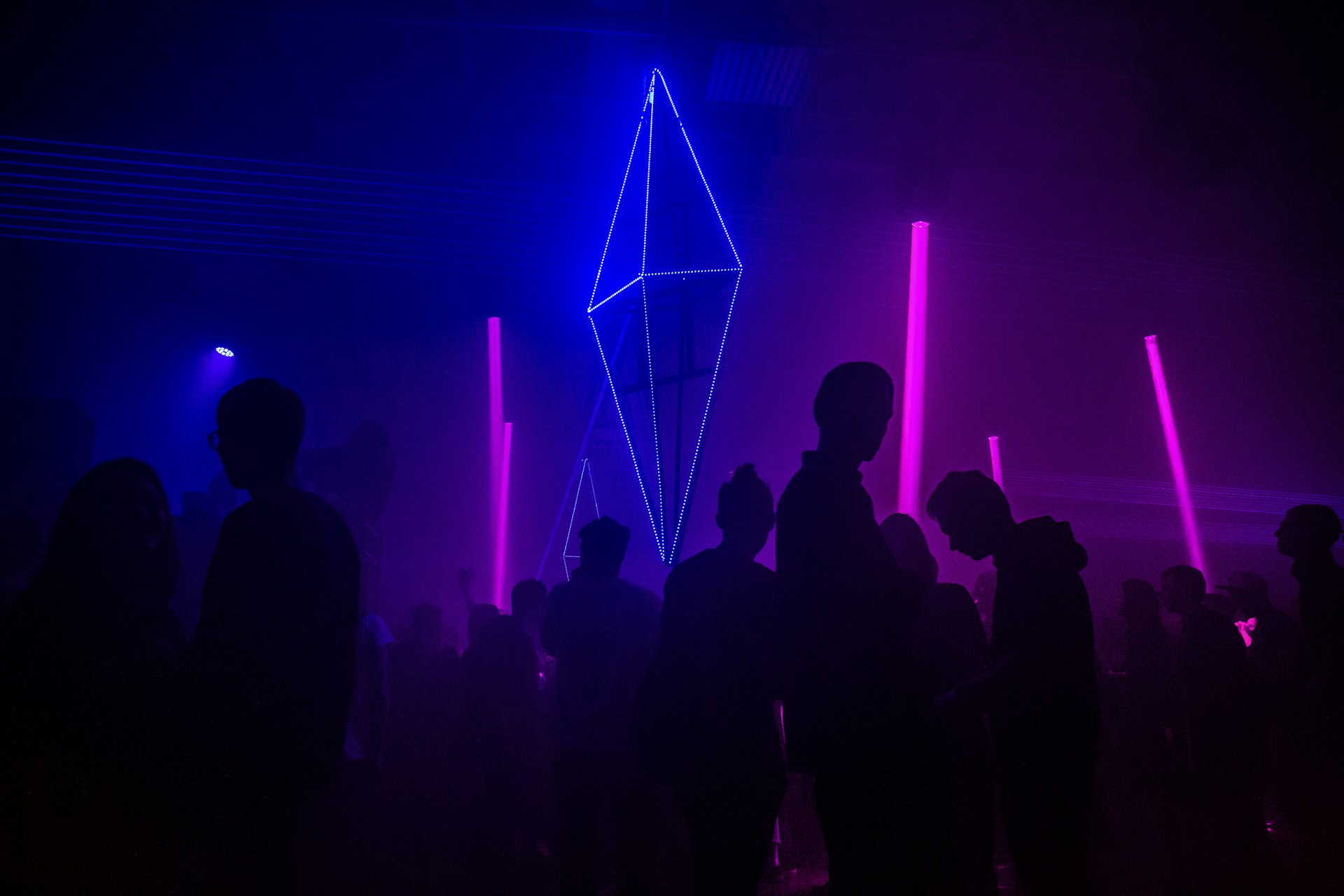
But sound was only part of the Printworks production equation. The light shows were legendary — arguably the most spectacular of any club venue in the world. The Press Halls' industrial strip lighting, combined with a massive complement of moving heads, lasers, strobes, and LED arrays, created visual experiences that matched the scale and intensity of the music. Production designers worked with the architecture of the building itself, using the 130-metre sightlines, the exposed beams, and the concrete surfaces to create light installations that were more akin to large-scale art than traditional club lighting.

The daytime format added another dimension to the production. Because events began in the afternoon, designers could play with the transition from natural to artificial light as the day progressed. The journey from daylight to darkness, from the openness of the afternoon to the intensity of the evening sessions, mirrored the musical arc of the events themselves and gave Printworks a rhythmic, narrative quality that purely nocturnal venues could not replicate.

📍 Visitor Info & Legacy

Getting there, what to expect, and the legacy Printworks leaves behind

Printworks was located at Surrey Quays Road, Canada Water, London SE16 7PJ. The nearest station was Canada Water, served by both the Jubilee line and London Overground, making the venue easily accessible from almost anywhere in London. The walk from the station took approximately five minutes, following the signs south along Surrey Quays Road. Surrey Quays station on the Overground was also within comfortable walking distance. Bus routes including the 381 and C10 served the area. Driving was discouraged due to limited parking, and the venue strongly recommended public transport.

The daytime format shaped the entire experience of attending Printworks. Arriving in the early afternoon — queuing in daylight, entering a vast industrial space while the sun was still high — created a fundamentally different psychological atmosphere compared to a traditional nightclub. There was a sense of transgression and liberation in raving at 2pm on a Saturday, and the energy of the crowd reflected this. People were fresher, more alert, and more engaged than the typical 3am club crowd. The format also made Printworks more accessible — you could attend a world-class electronic music event and still be home before midnight, which broadened the audience beyond the hardcore nightlife demographic.

The legacy of Printworks extends far beyond its six-year lifespan. The venue proved that London had an enormous appetite for large-scale industrial electronic music events, paving the way for subsequent Broadwick Live projects like Drumsheds in Tottenham Hale. It popularised the daytime rave format in the UK, influencing event programming across the country. It demonstrated that preserving and celebrating the industrial heritage of a building could be the foundation of a world-class cultural venue. And it gave a generation of London ravers a shared reference point — a venue so powerful, so visually stunning, and so sonically overwhelming that it became the standard against which all other London venues were measured.

Printworks also played a significant role in the broader cultural conversation about nightlife, urban development, and the value of music venues. Its closure as part of the Canada Water regeneration project — replacing a beloved cultural institution with mixed-use commercial development — became a focal point for debates about what cities lose when they prioritise property development over cultural infrastructure. The closure galvanised advocacy for venue protection and inspired renewed calls for a Night Czar-style approach to preserving London's nightlife ecosystem.


❓ Frequently Asked Questions

Everything you need to know about Printworks London

Yes. Printworks held its final season of music events in 2023. The building on Surrey Quays Road is slated for redevelopment as part of British Land's wider Canada Water regeneration project, a major urban development scheme that will transform the area with new residential, commercial, and retail spaces. Broadwick Live, the company that operated Printworks, has moved on to other venue projects, most notably Drumsheds in Tottenham Hale, which carries forward some of the large-scale industrial venue philosophy that Printworks pioneered. While Broadwick Live has expressed interest in opening future venues, the original Printworks space will not return as a music venue.
Printworks was famous for its daytime rave format, with events typically running from 1pm to 11pm. This was partly a result of the venue's licensing conditions, but it quickly became one of Printworks' most distinctive and cherished features. The daytime schedule meant attendees arrived in the early afternoon, often in daylight, and experienced the transition from afternoon to evening as the event progressed. The format attracted a broader and arguably more energetic audience than traditional late-night events. It also made world-class electronic music more accessible — you could experience a full rave and still be home before midnight. The daytime format became so closely associated with Printworks that it influenced event programming across London and the wider UK.
Printworks featured a custom-installed d&b audiotechnik sound system, one of the most respected names in professional live and installed audio. The system was specifically designed and calibrated for the challenging acoustics of the Press Halls — a 130-metre-long concrete industrial space with hard, reflective surfaces and immense volume. d&b audiotechnik's reputation for clarity, power, and even coverage made it the ideal choice for a room of this scale. The system delivered deep, physical sub-bass alongside crystal-clear mid and high frequencies, ensuring that the music sounded powerful and detailed whether you were at the front of the room or 100 metres back. DJs consistently praised the system as one of the best they had ever played on in the UK.
Printworks was located at Surrey Quays Road, Canada Water, London SE16 7PJ. The nearest station was Canada Water, served by the Jubilee line and London Overground. The venue was approximately a 5-minute walk south from the station along Surrey Quays Road. Surrey Quays station on the London Overground was also within walking distance. Several bus routes, including the 381 and C10, stopped in the vicinity. The venue strongly encouraged the use of public transport, as parking in the area was very limited. On event days, the route from Canada Water station to the venue was well-signposted and easy to follow.
Printworks operated a Challenge 25 policy, meaning anyone who appeared under 25 years of age could be asked for identification. Accepted forms of ID included a valid passport, a UK driving licence (full or provisional), or a PASS-accredited proof-of-age card. Student ID cards, bank cards, and other non-photo identification were not accepted. Expired documents were also refused. The venue recommended that all attendees carry acceptable photo ID regardless of age, as entry could be refused without it. This was a strictly enforced policy consistent with UK licensing requirements.
Yes. Printworks operated a cloakroom service at all music events. The cloakroom was located near the main entrance and charged a small fee, typically around £3–4 per item. Given the daytime format, many attendees arrived with jackets, bags, and layers that they needed to store during the event. The cloakroom was available throughout the duration of events and was staffed until closing. The venue recommended using the cloakroom rather than taking bags or bulky items onto the dancefloor, both for personal comfort and for the safety and enjoyment of others on the dancefloor.